This piece started out much shorter and smaller in scope and grew rather quickly. Lots of ideas here to be further fleshed out and I'd love to start a dialogue over anything here if you're interested. I appreciate this is a longer article but thank you for taking the time to read it!
Most of us have probably at least heard the marketing fluff of a mobile phone being "the world in your pocket"; entirely reliant on you (paying for) access to the internet on the go! Wowza, how cool is that! Hell, you may even have just read this from a phone right now!
Okay, perhaps the sarcastic tone gave away some of my intent then. I'm not that interested in "unlimited" (read: costly data plans) access to the internet whilst I'm on the go, it's probably not necessary and only really acts as a distraction from whatever you were most likely doing in real life whenever you pull the thing out of your pocket. But a discussion of the impact of the internet can come sometime in the future I suppose.
An alternative
We are constantly bombarded with new material, endless feeds of scrolling on social media platforms. It's hard to separate the wheat from the chaff or the gold from the pyrite. I think something a bit different could be in order. Sure, "infinite cosmic power" as Robin might have put it, in accessing the internet sounds great but it's full of poor options and too many avenues to properly navigate at times. You don't want to fall pray to distractions when there's work to be done, or worse yet find yourself playing something like league of legends in your spare time.

Much like the Genie's curse, we find that great power, even in itty-bitty living spaces can really fall face first if you don't consider what it costs.

As with many fields in life, when presented with many options we suffer from "decision fatigue" and "analysis paralysis" and you find yourself occupying too much of your time doing something you never really wanted to do nor enjoyed. I'd propose an alternative saying then; how about we consider the world, in your pocket? A bit more personal, at the very least then.
Now though I think this is a great opportunity to perhaps be used to tangentially talk about reducing your dependence upon the internet, I want to steer it in a slightly different direction. Let's consider a healthy first option or next actionable step you could look to take from here.
A world in your pocket? (Practical-Focused)
OK, so what might we be after here? What does it mean to have your world in your pocket? Well I think the concept of a "second brain" could fit in quite nicely here (though, I'd advise against stuffing real brains into your pockets). I'd offer a link here to elaborate but I'll spare you of the trouble of sifting through some other site or video only to find out very little and to have a course marketed at you for exorbitant fees. Though they may work for background reading or watching so do your homework if you're interested, for certain.
The gist, as I see it, is that the idea of a second brain builds from the notion that we are all pretty bad at remembering things, instead we should focus mental energy on doing what we're most proficient at. Problem solving and making connections between ideas. So this alternative is to devise a system which you can use to jot down ideas easily to be recalled and thought about later, this could be as simple as using your phone to produce notes that you sync to your computer or tablet or wherever you're going to work on them at a later date to develop the ideas that you interact with further. Some personal recommendations for this are:
- Joplin (FOSS with Desktop and mobile apps on all platforms)
- Obsidian (Proprietary but free, local storage with (paid cloud services). Recently released mobile apps)
- Vim (+ VimWiki; if you're familiar with vim this can be a lovely little system)
Though this list is not at all exhaustive and each option here has a million mini configurations for personalisation. I encourage experimentation (thankfully each of these platforms rely on simple markdown and text files so are easily transitioned from one another).
I would advise that people stay away from entirely-in-the-cloud services here. I don't really know about you but I don't personally want a company to hold copies of every idea I consider important enough to commit to memory somewhere. Let alone to have it beamed into a server I can't validate the security of, nor trust in it to have 100% uptime for access... or even expect that I'll always have internet access when I need to myself... Not a great idea in all, but feel free to experiment and find what works for you and assess your situation and willingness to take risk.
As a personal recommendation, I think that although Joplin is rather well-established and polished, Obsidian may simply be more accessible to more people. It has a simple(r) design that's easily customised and really plays into the 2nd brain concept with its graphs and linked idea trees. And whilst the graphs are rather pretty and cool, I at least personally doubt their efficacy at being used to visibly connect ideas, though, YMMV.
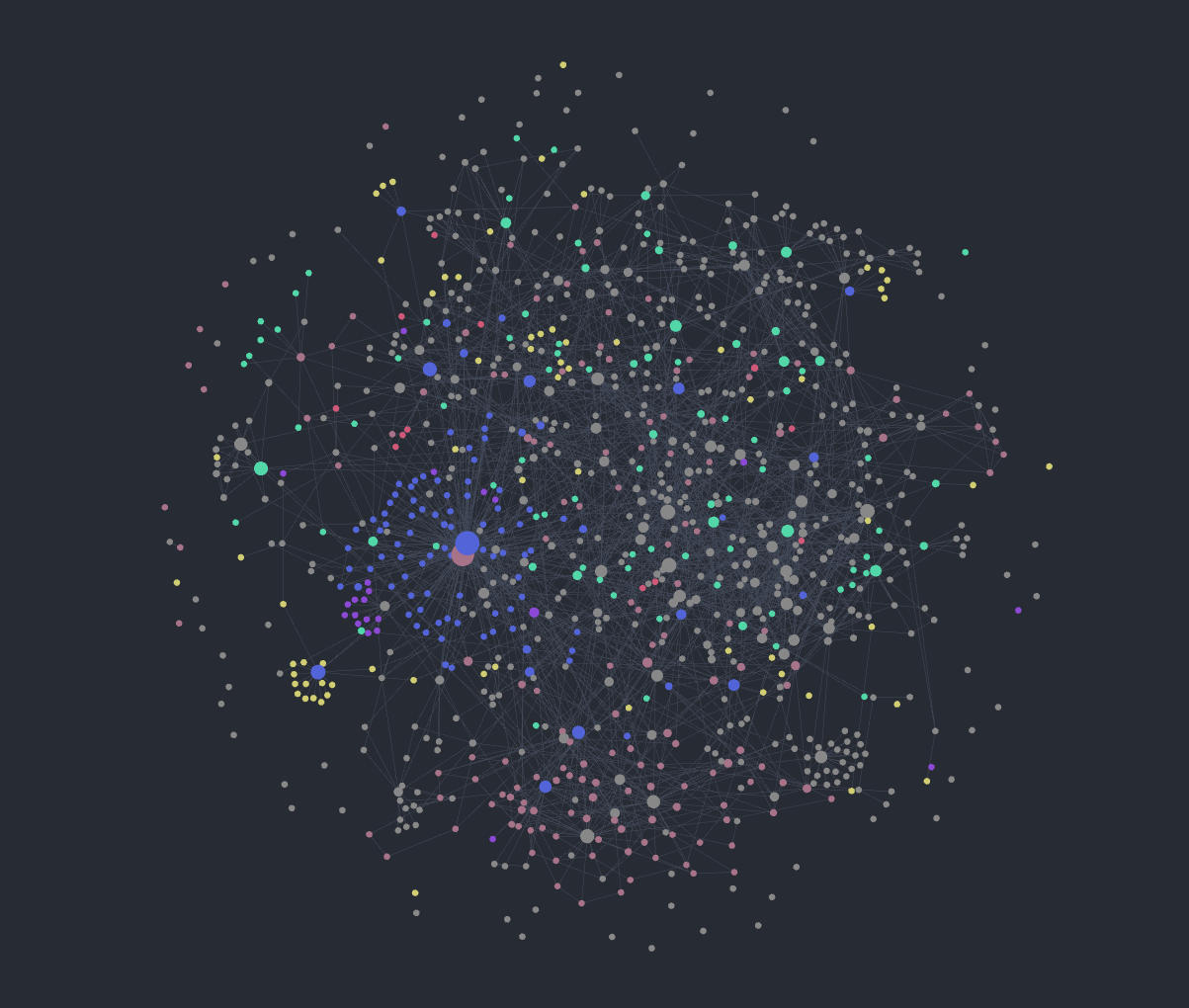
This can seem quite hands on and difficult to start but it is remarkably powerful once you get into the swing of things. You may already be doing something like this with a to-do list or some syncing cloud service you happen to jot ideas or things that pop into your head into that you want to recall later. I have personally found this process (though, still being refined and constantly adjusting) to be extremely rewarding and it has brought me significant clarity of mind and I'd love to write of it again in the future in its own dedicated piece. Perhaps with enough interest I could introduce my workflow as it stands today in an article with some videos or gifs to highlight what I'm up to.
A world in your pocket! (Creativity-Focused)
Wait, so was the last section not a creative endeavour? Well, whilst it certainly can be as you add your own flavour to your system and adjust everything to your liking; I wanted to put a spin on the "world in your pocket" notion to something a bit more artistic.
Our greatest connection to the past, present and future has and may very well always be literature. There are very few other ways you can come up with to keep an idea alive long enough to be thought about for a few years, let alone millennia. So people who have known me for quite some time will probably see this bit coming, but I think it's fair to say I am a massive e-reader shill enthusiast and that's where we're heading with this section.
I think this is an acceptable "artistic" option to this pocket-world idea (and don't fear; I will be writing more of these lovely devices in the future so stay tuned if you aren't wholly convinced of one just yet). The link here to art is of course that in a typical e-readers humble 8gb of space, you can probably contain more books and stories than you have ever read in your entire life. A library of knowledge to be at your fingertips any moment of any day. Possibly even for free (if you only read freely-obtained material, of course). Now we're getting somewhere cool, right? Mixing this section with the last may result in an addiction to thinking more, beware.
You could choose to read on your phone, sure, but I think they have poor displays for text based media. Though if you're visiting some of the best sites on the internet then I SUPPOSE I'd let you get away with using your phone...
There's probably a million other reasons I could look to listing why phones and tablets make poor devices for reading but I'll save it for another day, I'm sure you've experienced some of the negatives already if you've tried to do so for any prolonged period of time. In the meantime I'll address what I believe to be a common initial hesitation for trying them:
"It's just another screen, why bother? It won't look like a book"
Ah yes, another cur-sed screen! Though, I'd say it's unlike any other display you likely interact with. They are very easy on the eyes (completely unlike a typical screen, seriously, try going a week without looking at one and you'll be taken aback at how much your eyes struggle to really look at a display) and they function completely differently too. We are still only on the verge of finding coloured e-ink displays and save for those wanting to use these devices to look at predominantly nonfiction genres like cookbooks or academic textbooks where the colours might be useful, I find this cutting-edge expensive feature a bit redundant for most readers. In the case of a book, you really only need the text to display well, and these displays absolutely knock it out of the park. You can load your own typefaces onto them, customise sizes and margin widths on the fly and read anything in a format that suits you.
I doubly appreciate that you have a permanent bookmark in each book you tackle and constant progress bars between chapters and whole books. Lovely again that these devices are often waterproof and incredibly light too. Honestly, try reading an epic 1000 page novel whilst lay on your back in bed without fearing you might find yourself with a fractured wrist and exceptionally sore nose.
No doubt will I shill for these things again, I personally really appreciate the Kobo (brand) e-readers and think they're much nicer than some of the crap you put up with amazon kindles but to each their own and once more you should do your own research before plunging into a purchase! I don't think you need something with all the bells and whistles either so I would also strongly advise you look to older models. They're incredibly resilient little devices and something second hand or refurbished would be great too.
Hope these topics have gave you some food for thought and you can find a source of inspiration for your own great cosmic power in an itty bitty living space like I have.
Til next time.